
Server & Storage

Server & Storage Solutions
Client OutcomeHow Paragon Micro Delivers
The Situation
The Outcome
IT Solutions: Dell PowerEdge Servers | VMware Virtualization | Firmware Lifecycle Management | System Imaging | Full System Provisioning | Burn-In Testing
Client Review
Aging Infrastructure
Gets Expensive Fast.
OLD HARDWARE HURTS.
Year 5 servers lose 39% performance while support costs rise 148%.
DATA KEEPS GROWING.
54% of organizations expect on premises storage growth above 20% annually.
COMPLEXITY COSTS.
68% say complexity slows IT operations and initiatives.
AI EXPOSES GAPS.
82% say current IT infrastructure is not fully ready for AI applications.
DELAYING LIMITS OPTIONS.
By year 6, servers see 62% more unplanned outages, and storage sees 96% more.
Sources: Dell Technologies, HPE, Nutanix.

How We Help Build the Right Solution for You






Powered by Trusted Technology Leaders
Why Paragon Micro?
We plan ahead of the refresh.
We track your hardware lifecycle timelines, flag end-of-support windows early, and build structured refresh plans before urgency forces your hand. No surprises. No emergency procurement.
We size for your workloads.
We do not sell from a catalog. We assess your compute and storage demands, growth trajectory, and budget, then design a solution that fits what you are running today and what comes next.
We own the outcome.
From first assessment through deployment and long-term support, we are accountable for the full scope. No handoffs between vendors. No gap between what was sold and what gets delivered.
FAQsInfrastructure Refresh Planning
Twelve to eighteen months is the window where you have the most options and the least pressure. At that point, you can evaluate vendors properly, negotiate on price, phase the deployment around your operational calendar, and avoid the premium that comes with emergency procurement. We start the conversation with a lifecycle audit that maps every asset against its support timeline so you always know what is coming and when.
Not if it is planned correctly. We sequence every refresh around your critical systems and peak operational periods, using phased cutover strategies that keep production workloads running throughout. Nothing gets decommissioned until its replacement is validated and live. The goal is for your team to barely notice the transition.
It is not too late, but the approach changes. We move into triage mode first, assessing your current exposure, identifying the highest-risk assets, and prioritizing the sequence. End-of-support does not mean immediate failure, but it does mean you are carrying risk that compounds every day. We have managed enough late-stage refresh engagements to move quickly without worsening the situation.
FAQsCompute Architecture & Deployment
We start with your workloads, not the vendor catalog. That means understanding your virtualization density, memory and CPU utilization patterns, I/O profile, and where the environment needs to go over the next three to five years. From there, we map the right platform whether that is a rack server, blade, modular, or purpose-built AI compute node and match it against the vendors whose architecture fits your requirements and whose support model fits
Yes, and it is more common than most organizations admit. We design around what exists rather than requiring a clean-slate environment. That includes integration with existing management tooling, network fabric, and storage connectivity, so the new infrastructure lands cleanly without forcing a parallel rebuild of everything adjacent to it.
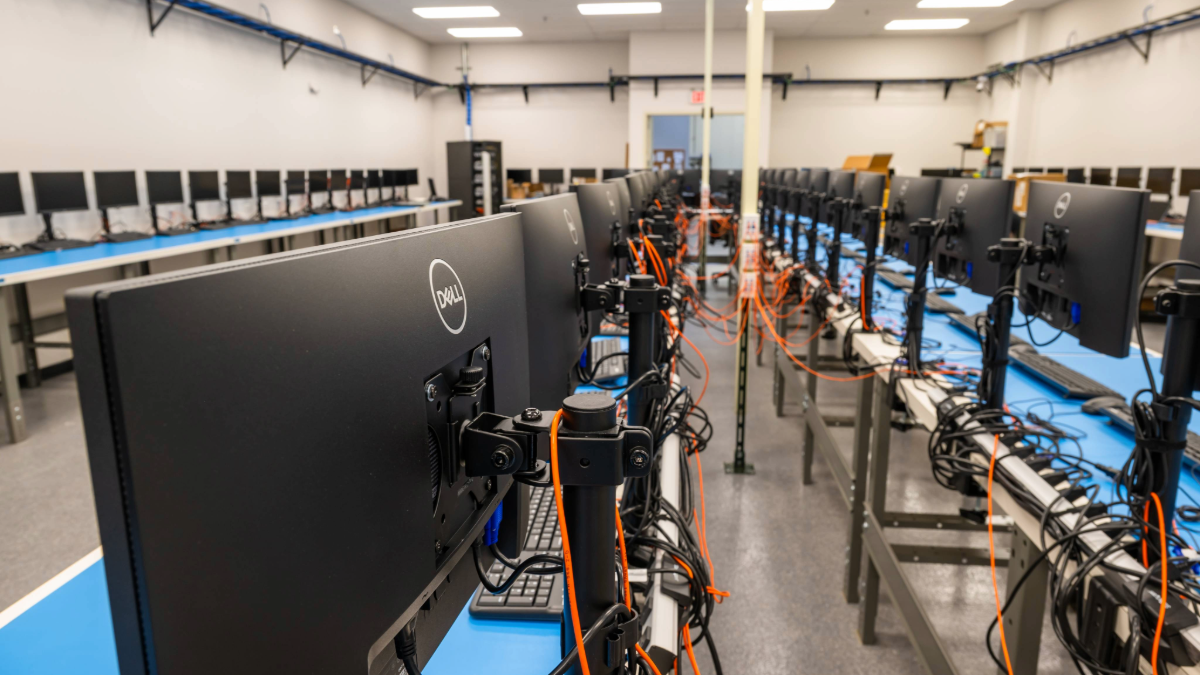
We manage the full chain, from configuration and factory imaging through physical installation, cabling, integration testing, and handoff documentation. For larger deployments, we provide as-built diagrams, rack elevation drawings, and port mapping so your team has an accurate record of exactly what was deployed and how it is connected. Nothing goes into production until it has been validated against the agreed specification.
FAQsAll-Flash & Hybrid Storage
The answer depends on your I/O profile. If your workloads are latency-sensitive databases, VDI, analytics, and AI inference, the performance delta between all-flash and hybrid is significant, and the cost gap has narrowed considerably. For workloads with cold data tiers, archival requirements, or lower performance demands, hybrid still makes financial sense. We model both options against your actual workload data so the decision is based on numbers, not a vendor’s preference.
Carefully and in stages. We map every data flow, identify dependencies, and design a migration sequence that moves workloads one at a time with validated rollback options at each step. Data migrations are where things go wrong when they are rushed. We do not rush them. Every cutover is tested, timed to a low-risk window, and confirmed before the old platform is decommissioned.
Deduplication and compression ratios vary significantly by workload type. Databases and virtual machines typically see strong reduction ratios. Video surveillance and already-compressed data see very little. We model expected effective capacity based on your actual data profile before sizing, so the capacity you purchase reflects what you will actually get, not the best-case number on a vendor datasheet.
FAQsHyperconverged Infrastructure (HCI)
HCI is a strong fit for environments that want to simplify operations, reduce hardware sprawl, and scale in predictable increments. It performs well for VDI, remote office deployments, and general virtualization. Where it can fall short is in environments with very high storage I/O demands, large all-flash requirements, or workloads that need independent scaling of compute and storage at different rates. We assess your environment honestly and tell you when HCI is the right answer and when it is not.
Most HCI platforms integrate tightly with VMware, Nutanix runs natively on vSphere and has its own AHV hypervisor as an alternative. The Broadcom acquisition of VMware has significantly changed the licensing landscape, and many organizations are now evaluating whether to stay on vSphere or transition to an alternative hypervisor as part of their next HCI refresh. We work through that decision with you so the platform choice accounts for where licensing costs are heading, not just where they are today.
HCI scales by adding nodes; each node adds compute, memory, and storage simultaneously. The process is typically non-disruptive, and the cluster rebalances automatically. The tradeoff is that you cannot independently scale compute without also adding storage capacity, and vice versa. For environments with predictable, balanced growth, that is a strength. For environments with uneven growth patterns, it is worth modeling carefully before committing to the platform.
FAQsConsolidation & Simplification
Paid-off hardware carries a hidden cost that rarely appears on a balance sheet: maintenance contracts, energy consumption, management overhead, and the performance ceiling it puts on everything running on top of it. We build a total cost of ownership model that puts those numbers alongside the consolidation investment so the comparison is honest. In most cases, the ongoing cost of maintaining aging infrastructure exceeds the cost of replacing it within 2 to 3 years.
With proper planning, less than most organizations expect. The disruption typically comes from poor sequencing, unclear dependencies, and trying to move too fast. We spend significant time in the discovery and planning phase, mapping workload relationships and identifying what can move when — so the migration itself is methodical rather than reactive. Most consolidation projects we run have minimal production impact because the hard work happens before anything is touched.
Yes, and distributed environments are often where the consolidation ROI is strongest — particularly for remote and branch office locations running underutilized hardware with no local IT support. We assess each site against workload requirements and connectivity to determine what should be consolidated to a central or regional hub and what should stay local. The result is a leaner footprint with better manageability and lower total cost across the estate.
FAQsCapacity Planning & Roadmapping
We plan for ranges rather than a single number. Using your current utilization baselines and historical growth trends, we model conservative, expected, and aggressive scenarios — then design an architecture that handles the expected case without over-provisioning for the aggressive one. The goal is a platform that can scale when growth arrives, not one that is already at capacity on day one or carrying unused infrastructure for years.
It is a living document, not a slide deck. It maps your current environment against vendor lifecycle timelines, flags upcoming end-of-support events, and sequences recommended investments across a three to five-year horizon. We review it with you quarterly and update it as your environment and vendor roadmaps evolve. The value is that it turns reactive infrastructure decisions into planned capital expenditures your finance team can see coming.
That is one of the most common planning challenges we work through. The answer is a workload-by-workload classification of what stays on-premises, what moves to the cloud, and the timeline for each. Infrastructure investments are then scoped to what needs to run on premises for the planning horizon, with right-sized lifecycles that do not outlast the migration plan. If you stop buying infrastructure you will not need in three years, and stop under-investing in what you will.
SERVER & STOARGE READINESSSecure Capacity Early
procure, stage, and deploy infrastructure early so budget, timelines, and availability stay under control.
Sources: Dell Technologies Enterprise Upgrades for Server Infrastructure | Nutanix 2026 Enterprise Cloud Index.

Refresh

Capacity
Supply

Deployment
Ask us about...Configuration, Integration, and End-to-end Support.
Server performance, storage capacity, virtualization needs, backup requirements, and workload growth are aligned so infrastructure does not just refresh, it performs reliably.
You do not have to coordinate across disconnected vendors, hardware timelines, and implementation workstreams. We bring it together as one environment planned, integrated, and ready to run.